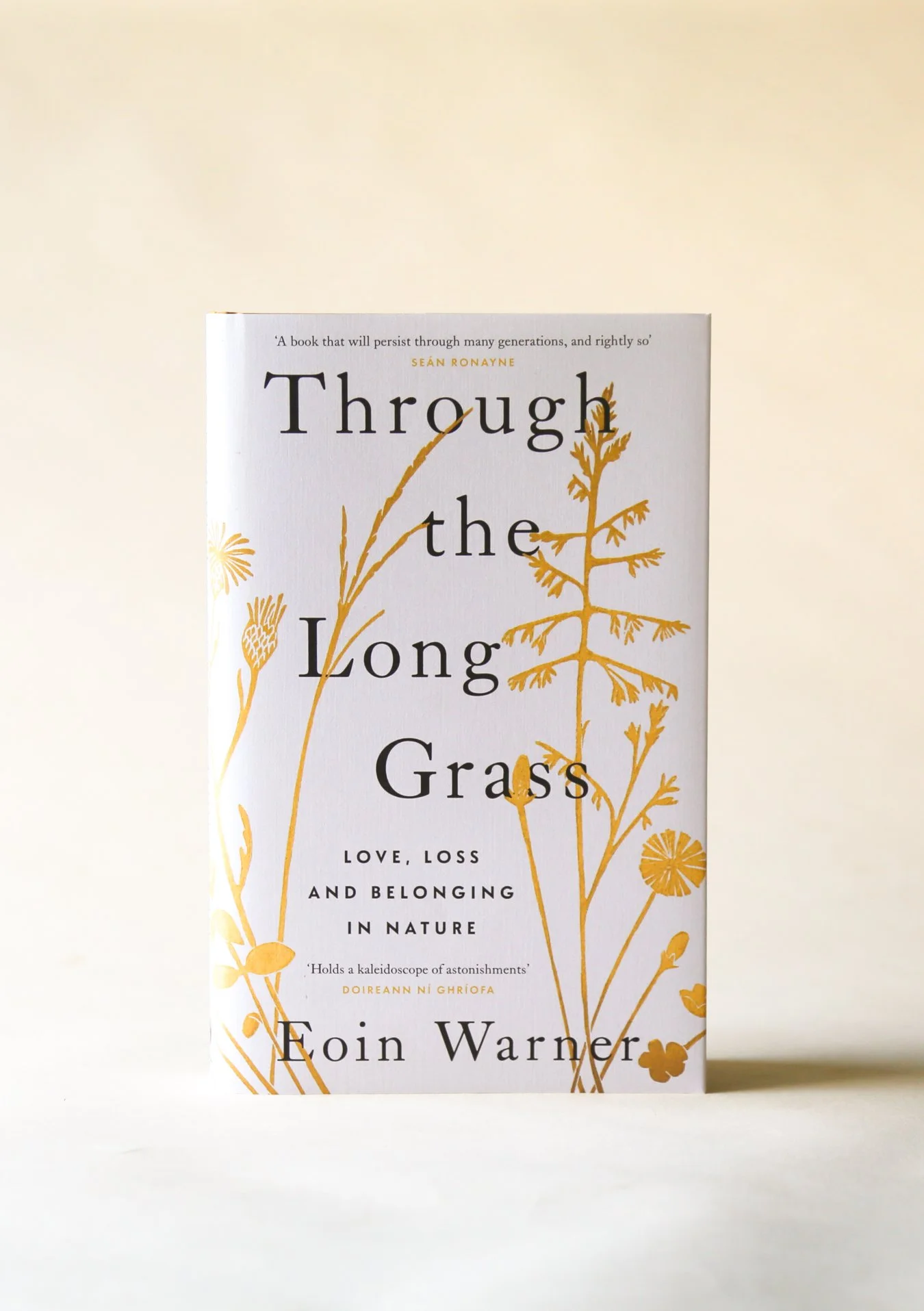
Through the Long Grass by Eoin Warner launched in September 2026
‘Through the Long Grass holds a kaleidoscope of astonishments, as through a sequence of thoughtful meditations, Eoin draws readers through life’s deepest sorrows, towards the purest of joys.
Written with eloquence and curiosity, this is one of those rare books where readers encounter the precious, intimate experience of turning the pages and feeling thepresence of another being’s heart beating. A wonderful book, one to cherish.’
Doireann Ní Ghríofa
‘We all know Eoin Warner’s soft, lyrical voice from nature documentaries. Now he brings his song to the written page, and reading this gorgeous book the words speak to you in those same tones, like a good, trusted friend relating a story. As so often with the most powerful, memorable nature writing, this book is, in essence, a collection of stories that meld personal life experiences – like the very early loss of his father – with a love of the natural world that is as unapologetically bold as any wild flower, tree or animal. His descriptive powers, passion, and raw honesty will immerse, astonish, and transport you to hidden places you never even knew existed. As soon as word gets out, this book will fly off the bookshop shelves.’
Eoghan Daltun
‘Long after I close the pages, the moments captured in this captivating book continue to resonate and mesmerise. Through intriguing encounters with wild beings, Eoin lends us an indelible lens through which to see the world. This is an eye-opening sharing of perspective by a gifted writer, weaving together ecology, history, folklore and personal insight. Through the Long Grass is generous, enchanting and important.’
Anja Murray
‘This book is so delicately written, and paints such a vivid image of the beauty of Irish nature and of life itself. But it also links it all tenderly into Eoin’s own warm and thoughtful self. This is a book that will persist through many generations, and rightly so. This is a book that will soak into your very bones, and you’ll be left looking at the world in a different light.’
Seán Ronayne
The making of the art - A collaboration with Superfolk
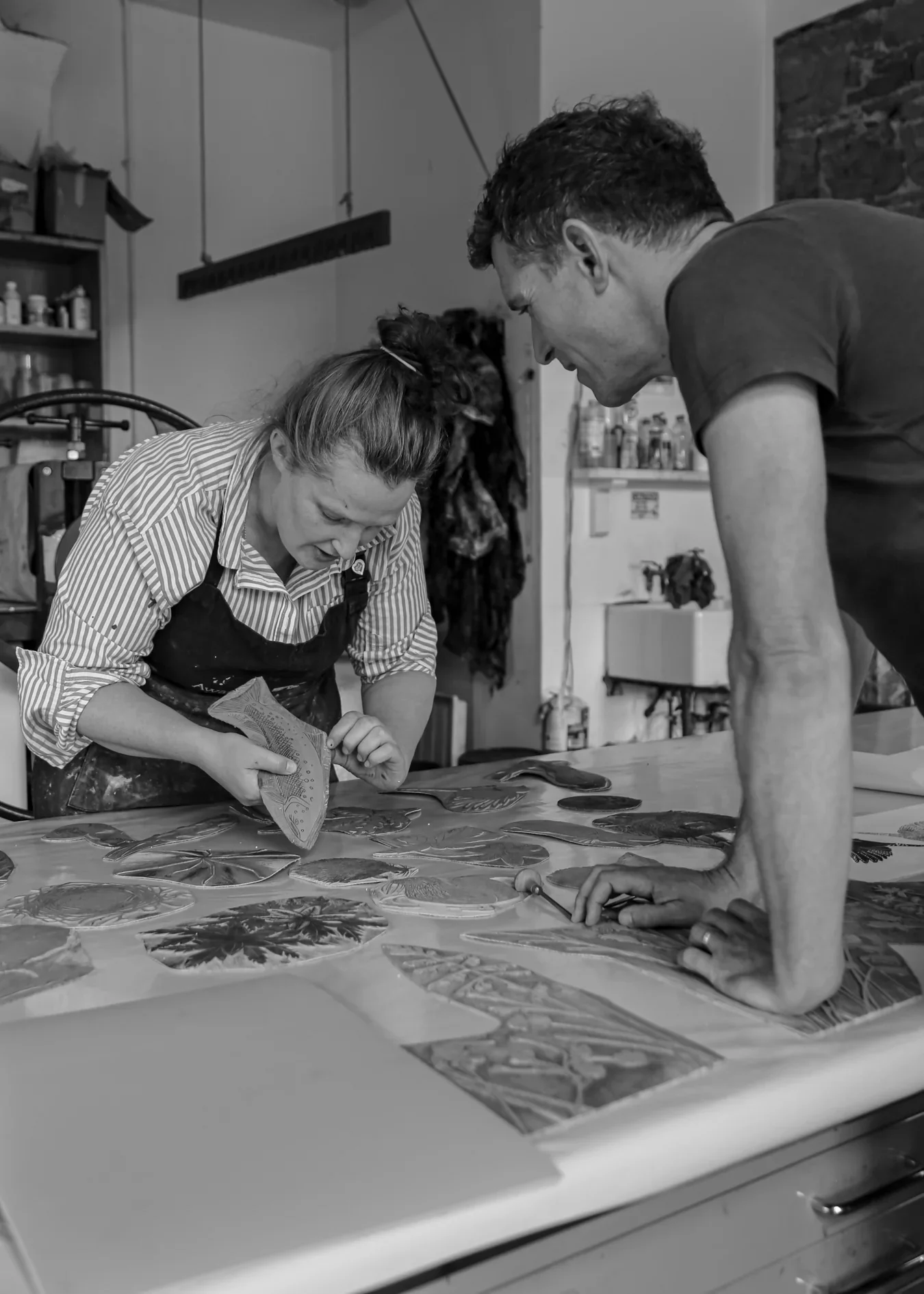
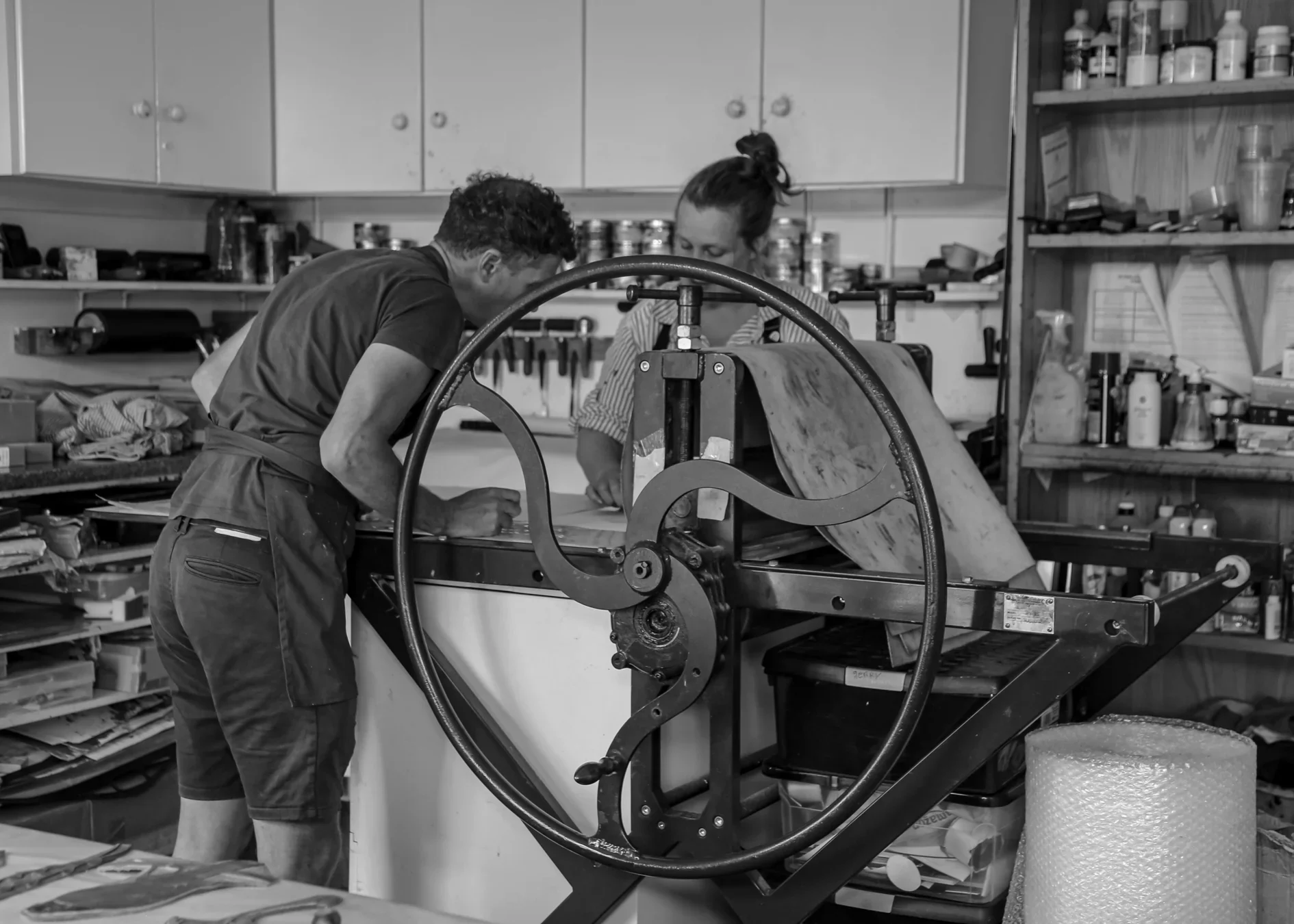
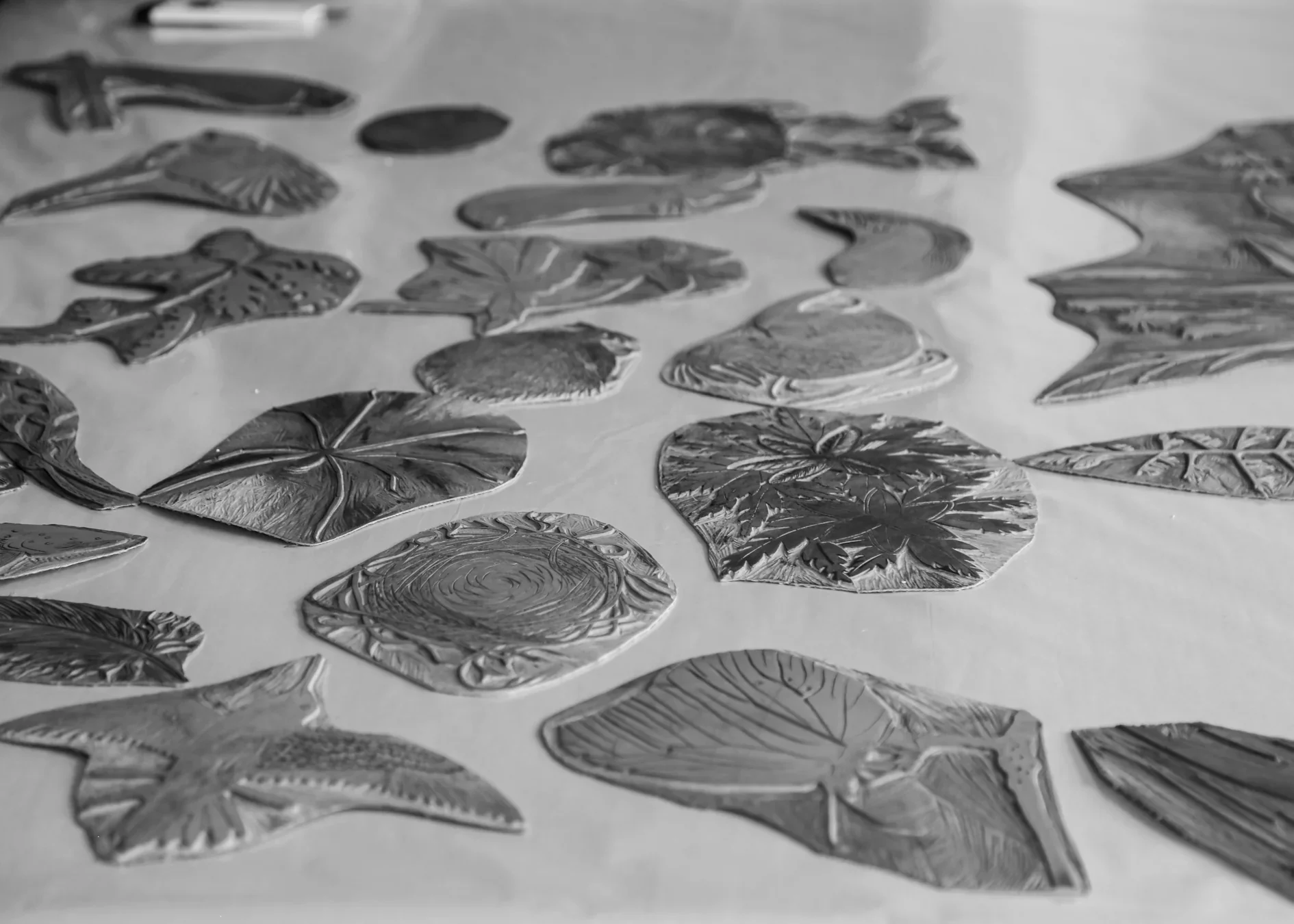
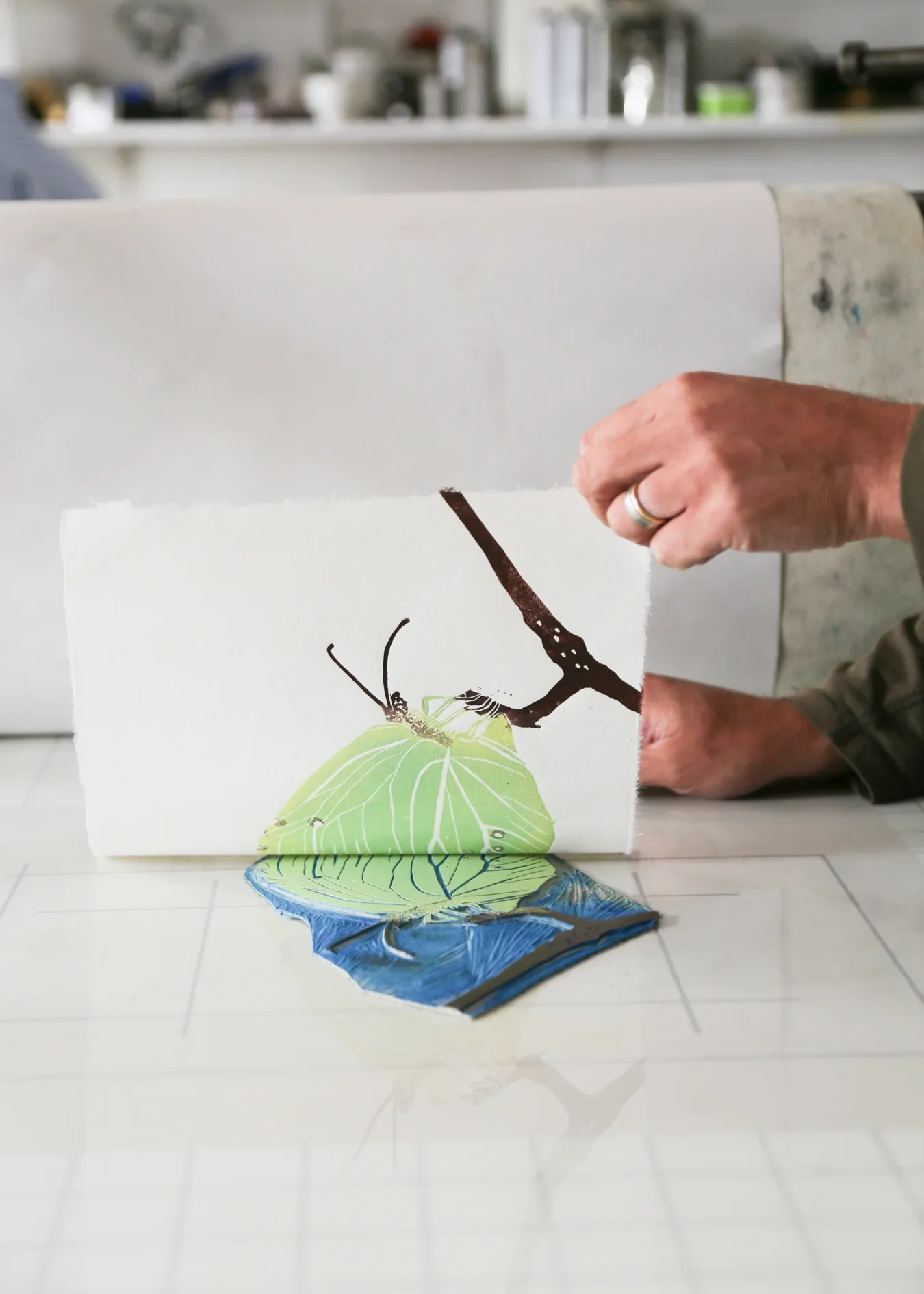
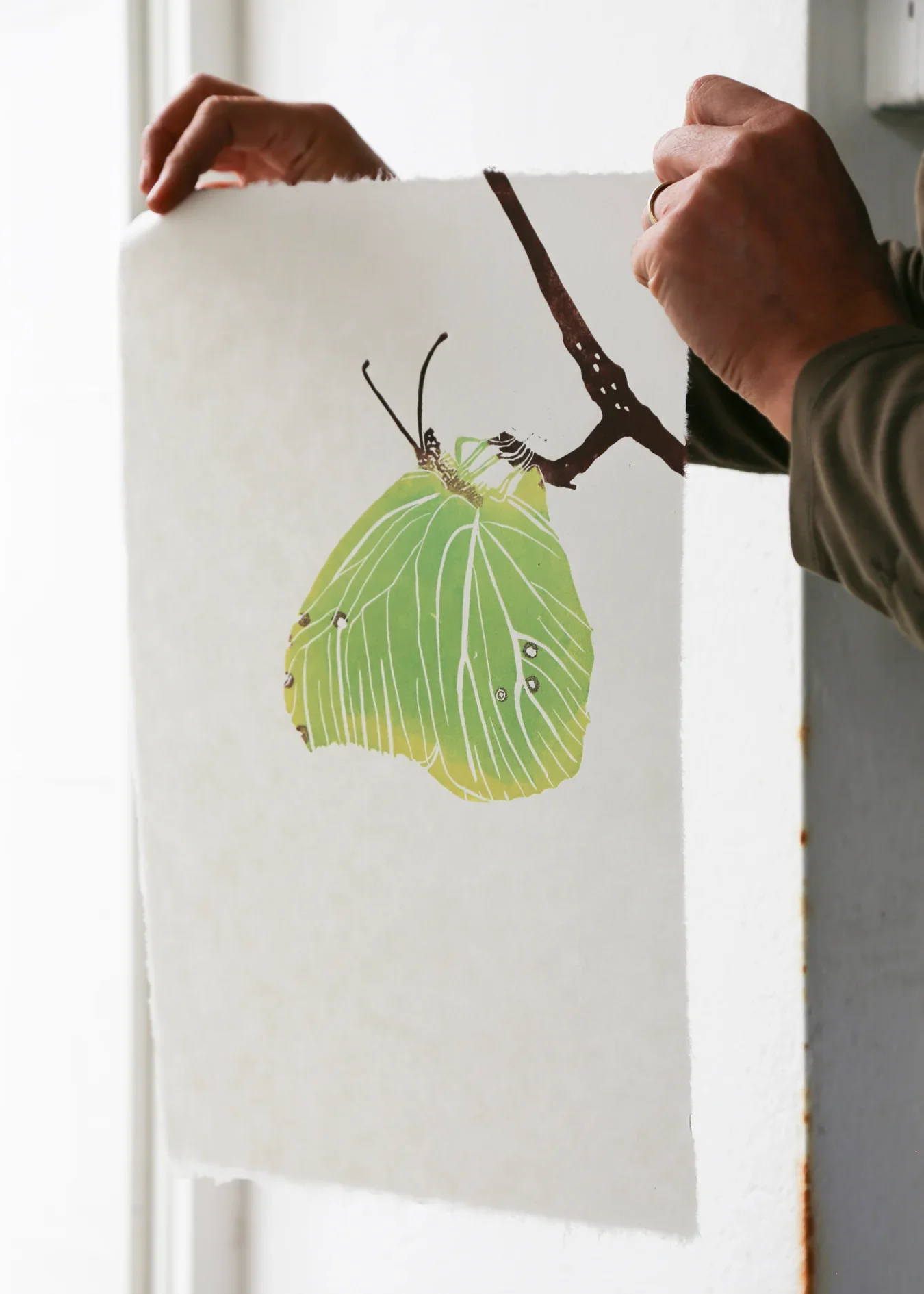
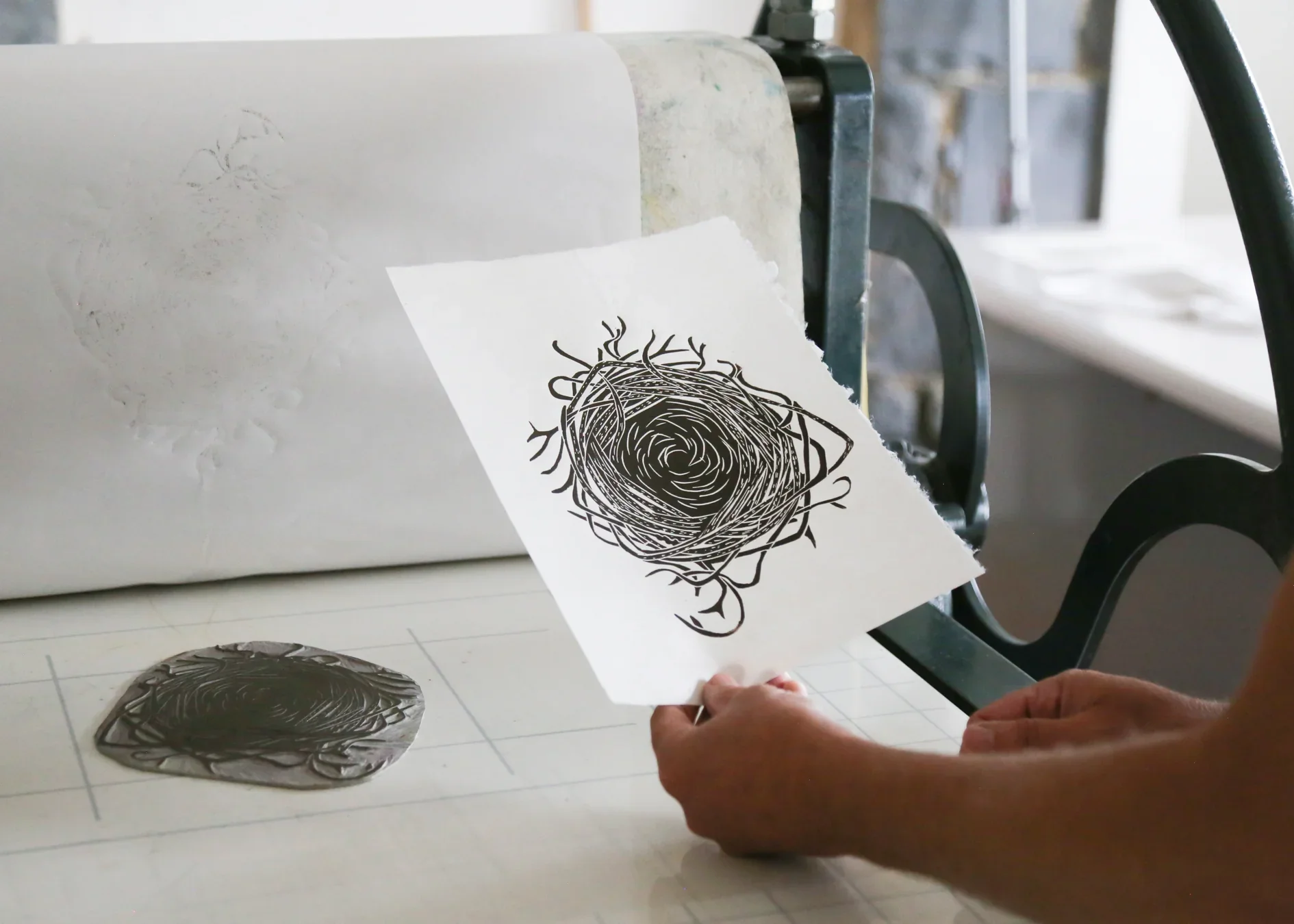
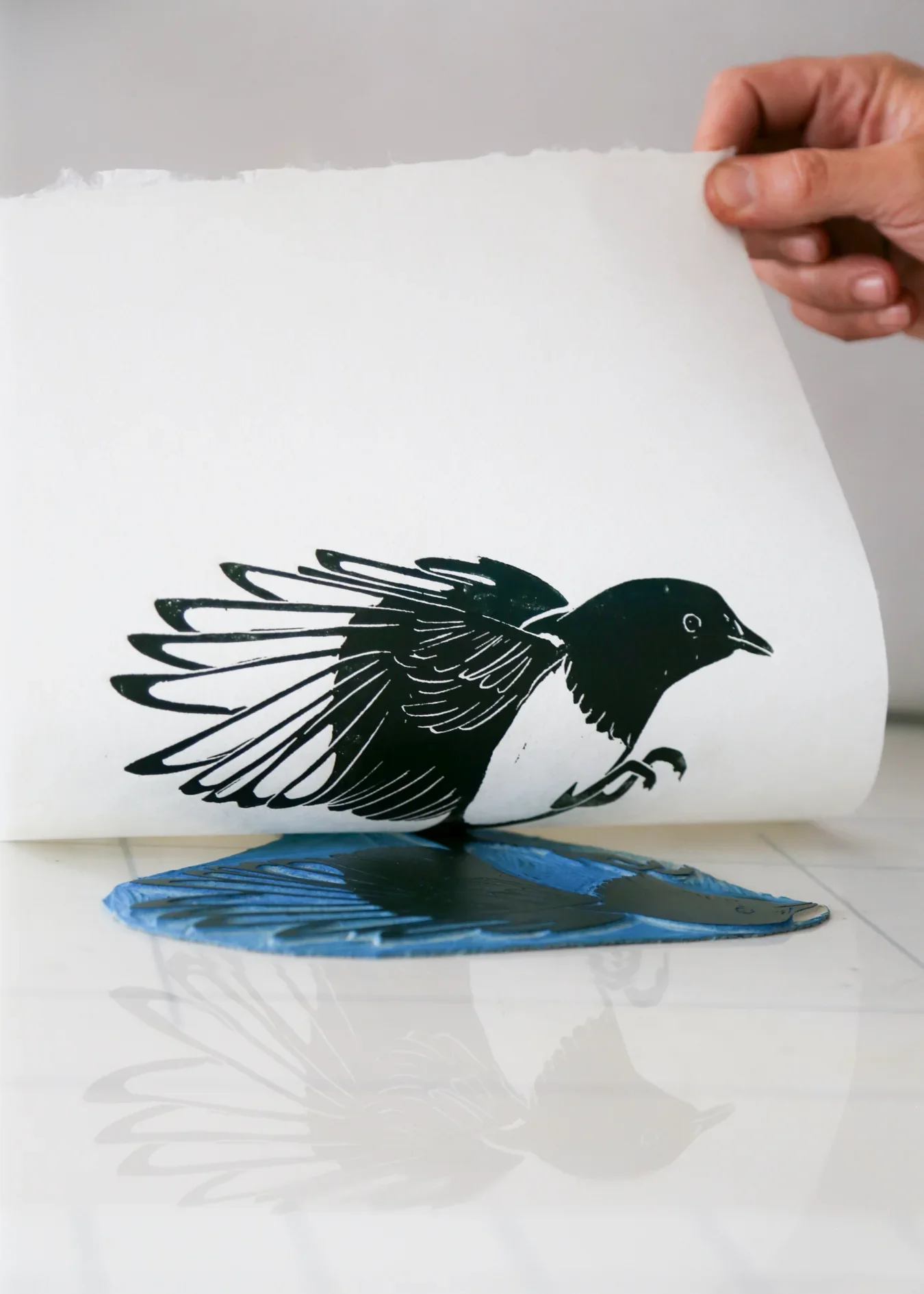
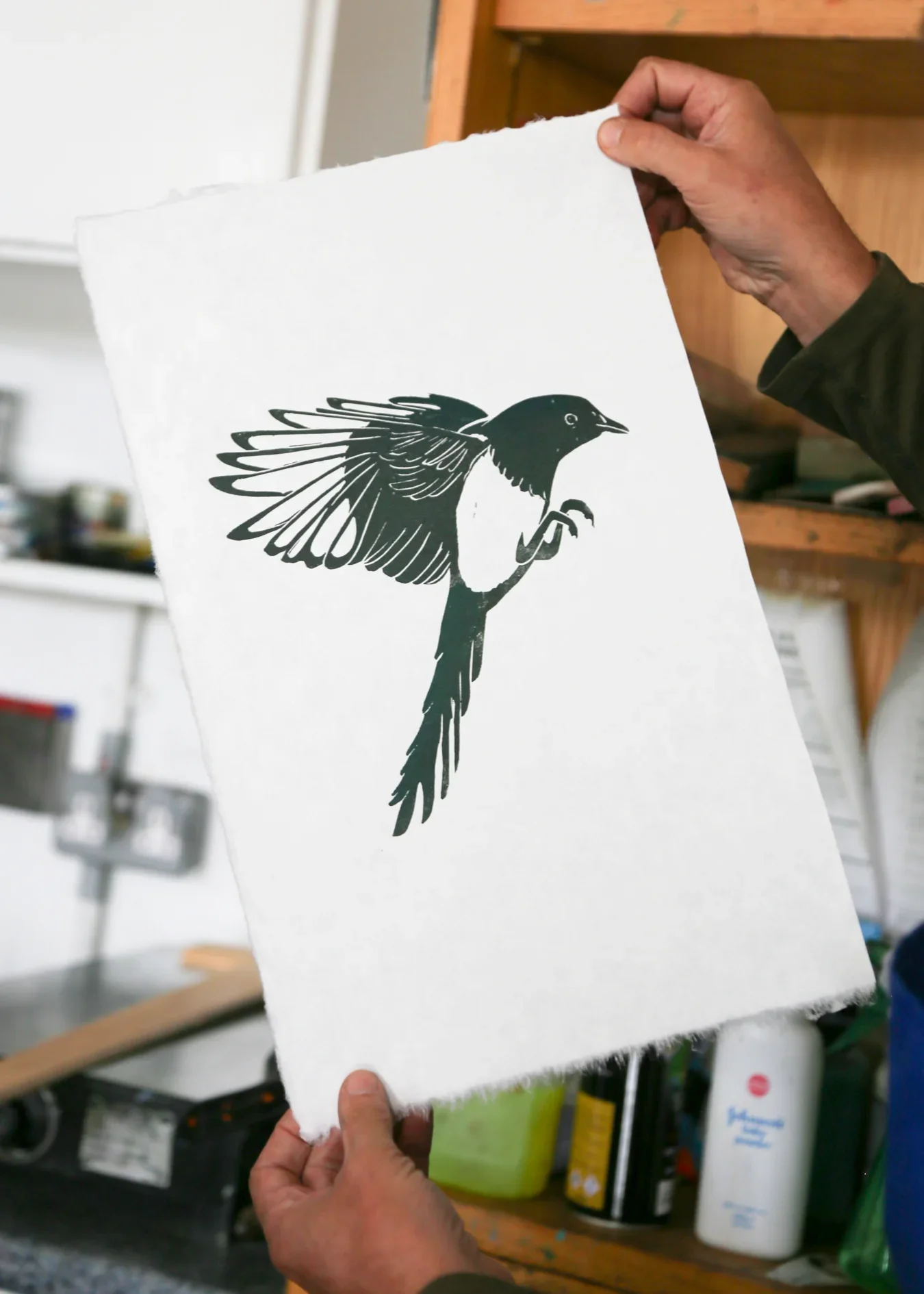
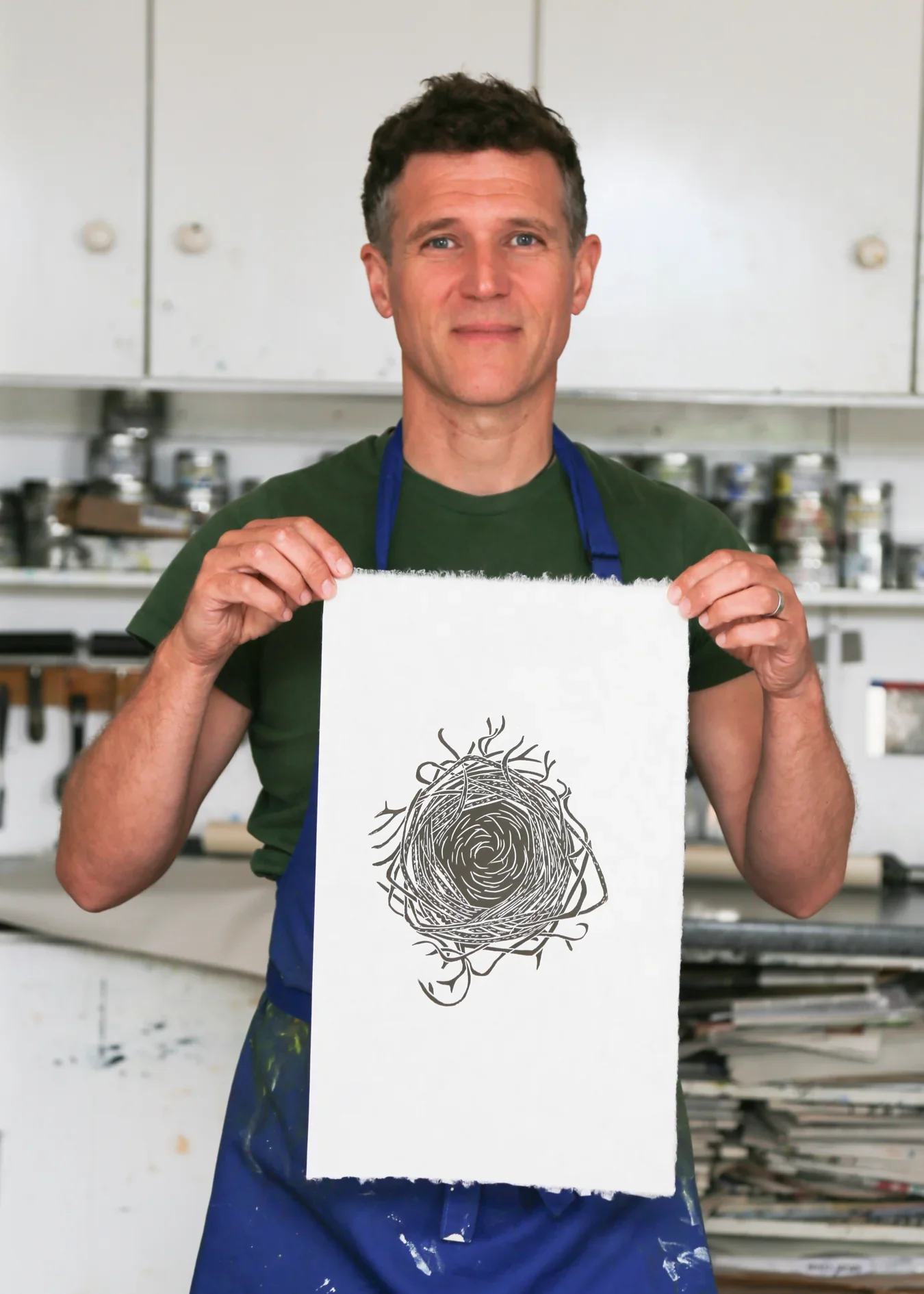
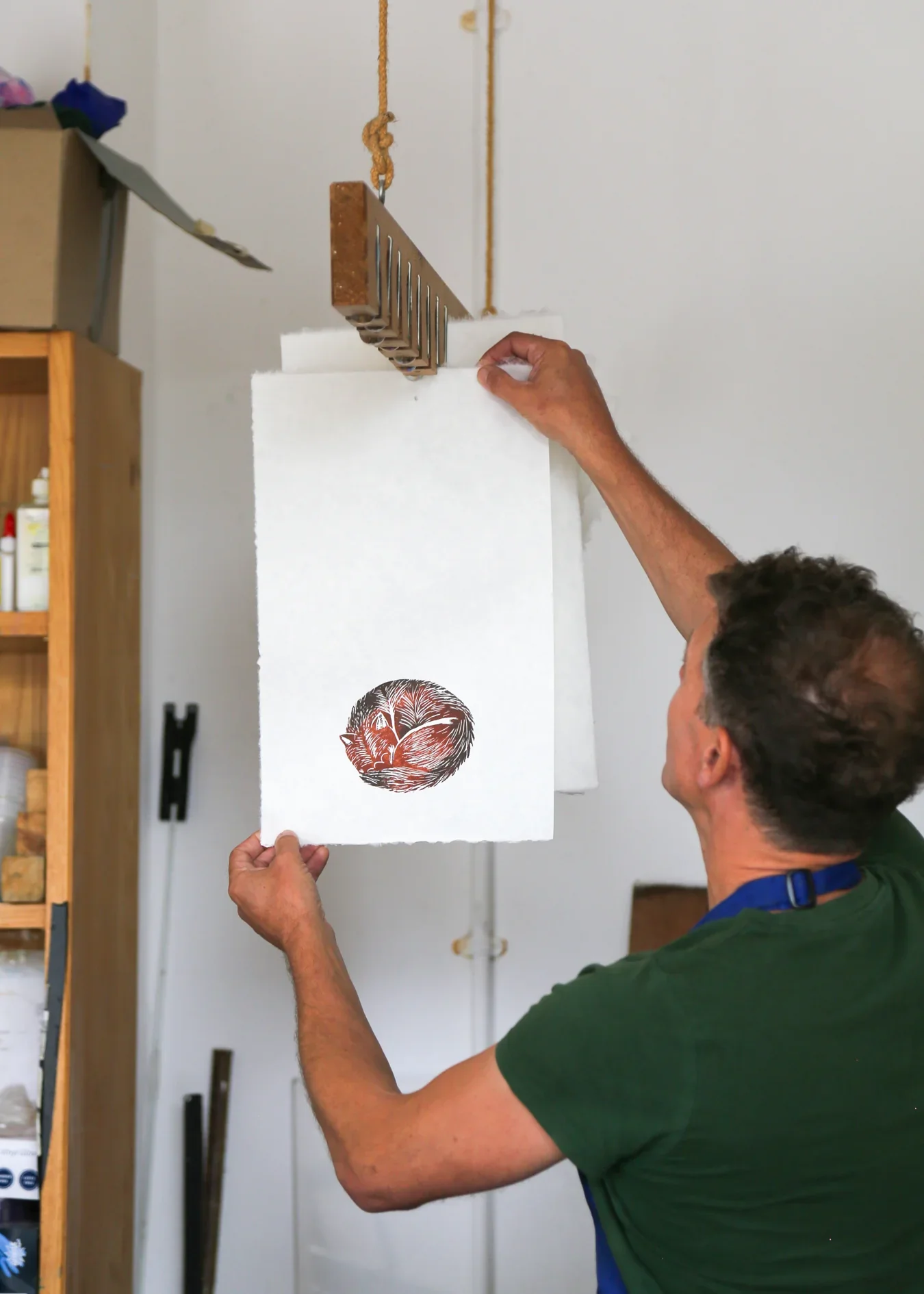
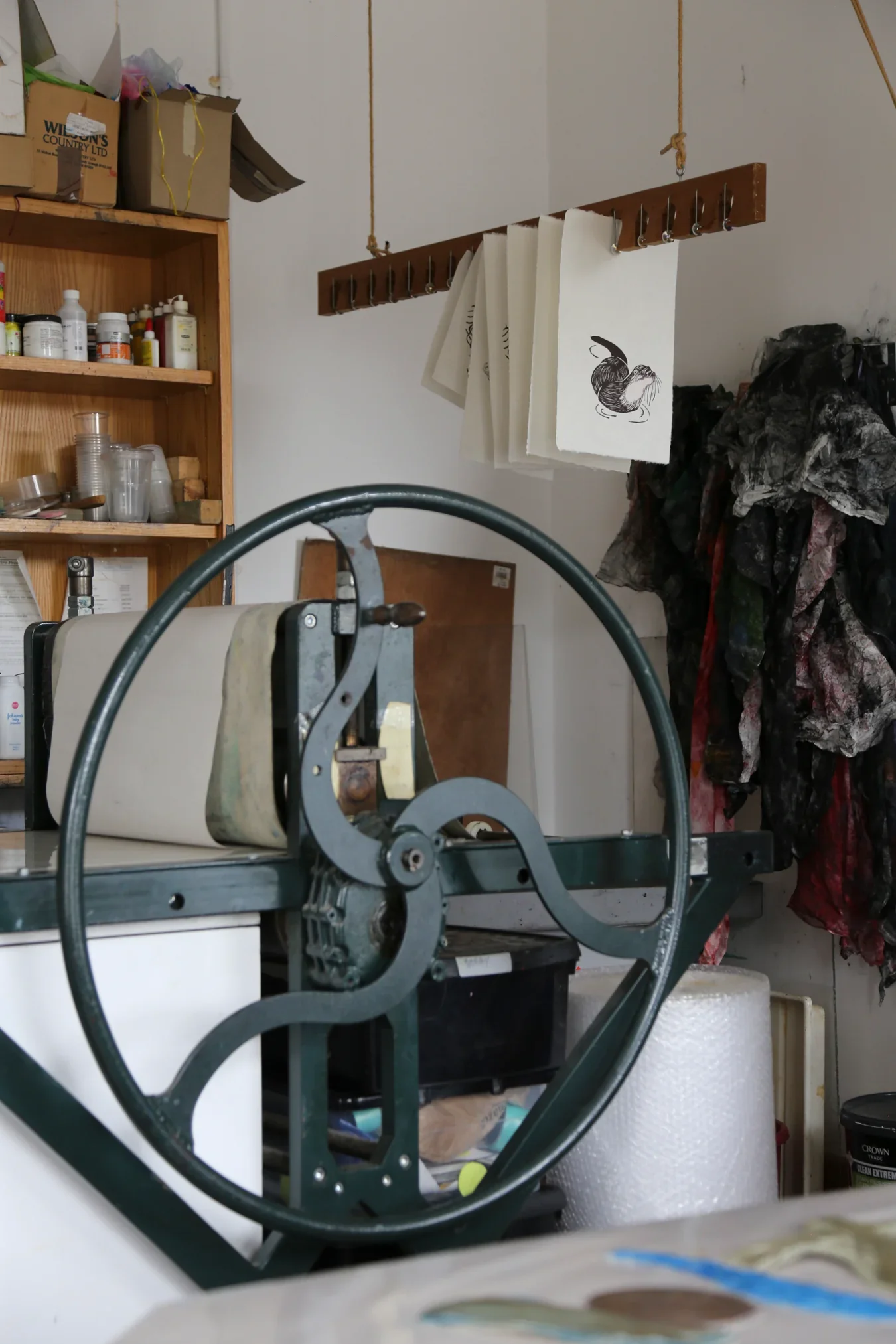
This series of photographs and short article by Jo Anne Butler offers a behind the scenes view into the illustrations that bring so much beauty and life to the pages of Through the Long Grass. Carved lino prints are inked and placed through a roller printing press to bring these wild creatures to life.
Words : Jo Anne Butler
Photos : Gearoid Muldowney
When Eoin first came to us late last year, he asked if we would work on the illustrations for a new book he was writing. He explained that he wanted the illustrations for the book to be lino carvings. He said he liked the simplicity and clarity of our lino print work. We were fans of his work, and so of course we agreed to his proposal. This was something I would later begin to regret...
Why? Because as Eoin began to send us the chapters from his book through to us, I began to appreciate that there was a vulnerability and delicacy in his writing. I could sense his care and attention to the smallest details of our natural world. And this was when I began to worry I could not match or convey this tone - especially working in lino.
Sometimes when I am working on a project in the studio, an idea or an insight comes to me as a shape, a form, an image, or a colour. Sometimes all I get is just a single word. In this instance, one single word came to me with complete clarity: and that was the word jewellery.
I don’t quite know where it came from, but one day as I sat carving a piece for the book - it came to me. Jewellery. I put down my lino carving tools and repeated it to myself. Jewellery.
I knew exactly what this meant.
Over our 11 o'clock coffee I explained to Gearoid what I now understood - I needed somehow to express the value and preciousness in the smallest details of the natural world— a tiny wren, a falling feather, a field of dangling harebells, a delicate empty bird nest. These small things needed to feel valuable, rich, precious, but also fragile. My illustrations needed to find a way to express something of the beauty and vulnerability of Eoin’s writing.
And this was where I was struggling with carving lino as a medium. Because as much as I love it, lino printing can sometimes feel a little like driving an old, heavy, slow vintage tractor. And there I was, caught in its ruts and ridges, while the sentiment of the book seemed to be full of movement, like the flowing water of a swollen river or wind rustling through an ancient woodland.
How was I ever going to make my heavy, resistant lino material and the publisher's black-on-white palette convey the movement of a feather falling through the sky, or the shy vulnerability of a baby hedgehog?
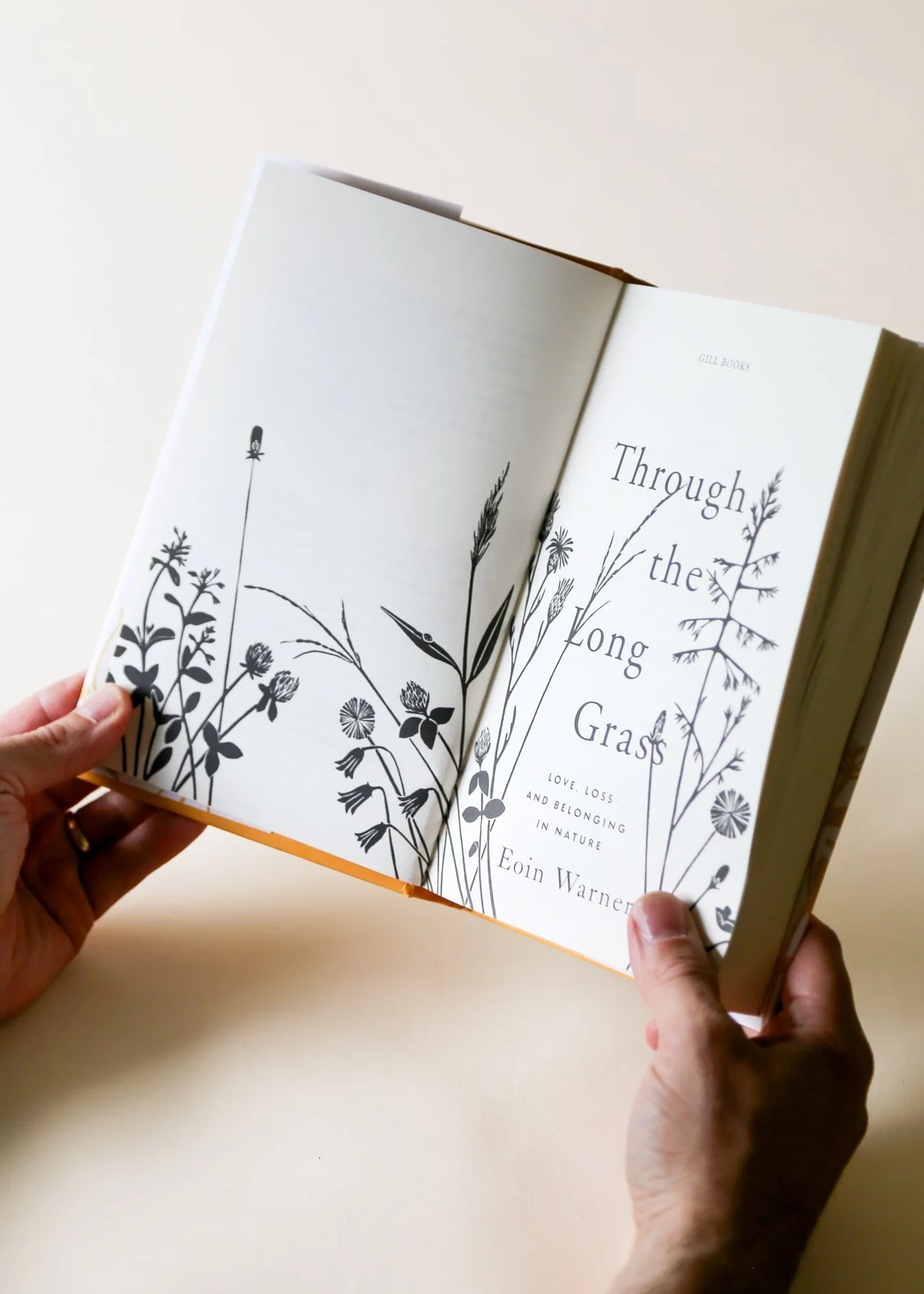
In the end, it came to me - the illustrations needed to be allowed to roam and decorate the pages. They should not sit centred and squared, orthogonal and certain. These creatures of nature should be allowed to dance and move across the pages — searching, seeking, sneaking, hovering, circling, dangling, growing, falling and flying — just as the natural world moves and breathes around us when we take the time to stand still and look closely.
I began to imagine the reader sitting peacefully with this beautiful book, turning a page and happening upon these shy but animated creatures crawling or flying across the white space. I wanted the turning of each page to an illustration to feel like that experience of turning over a large rock in nature and watching the ants underneath suddenly scuttle away.
By allowing the white space of the page to become part of the illustrations, we finally found a way to open a window and let more light and movement into the book. This also felt more resonant with the chapters themselves. Each contains a moment of magic with an unexpected interruption or encounter with an animal or bird in the wild.
Maybe lino printing wasn't the wrong medium after all. I began to appreciate the contrast of the heavy black lino shapes against the white of the page. Flying, hovering, crawling and sometimes, like the hare in a field at dusk, just staring right back at us.